Search for the best drinking water filtration system for your home and you'll find a wall of rankings, each one crowning a different winner. That's because the honest answer isn't a single product. The best system is the one that matches what's in your water and how you plan to use it, and a system that's perfect for one household can be a poor fit for the house next door.
This guide skips the hype and walks through what actually makes a drinking water filtration system the right choice: the main types and what each one does well, the certifications that separate real performance from marketing, and the questions worth answering before you spend anything. If you want a deeper step-by-step on the selection process itself, our guide on choosing the right water filtration system for your home goes further. This post focuses on comparing the options and knowing what "best" should mean.
Start With Your Water, Not the Product
Every filtration technology is good at some things and weak at others, so the first step is knowing what you want to change. Common goals include reducing the chlorine taste and odor, reducing specific contaminants like lead, lowering the amount of dissolved minerals, or dealing with the hardness that leaves scale on fixtures and glassware.
In Santa Clarita, hard, mineral-heavy water is a part of the picture for most homes, and that affects both taste and equipment. Our post on whether hard water in Santa Clarita is ruining your plumbing explains what it does, and it's worth reading before you decide, because hardness changes which system will serve you best and how long its filters will last. A water test, even a basic one, turns a guessing game into a clear target.
The Main Types of Drinking Water Filtration Systems
Most home drinking water systems fall into four groups. Each has a real role, and the right one depends on your goals, your budget and how much installation you're willing to do.
Pitcher and Faucet-Mount Filters
These are the simplest and cheapest option. They use a small carbon cartridge to reduce chlorine taste and odor, and some are rated for certain additional contaminants. They require no installation, which makes them popular with renters, but the cartridges are small, flow is slow, and they need frequent replacement. They're a reasonable starting point, but they're rarely the long-term answer for a household that drinks and cooks with a lot of water.
Under-Sink Carbon Block Systems
An under-sink carbon block filter connects to your cold water line and delivers filtered water from a dedicated faucet. The larger filter holds more media than a pitcher and lasts longer, and it's better at reducing chlorine, taste and odor, and certain contaminants depending on the certified model. It doesn't change the dissolved mineral content of the water the way reverse osmosis does, so it's a good fit if you mainly want cleaner taste without stripping minerals.
Under-Sink Reverse Osmosis Systems
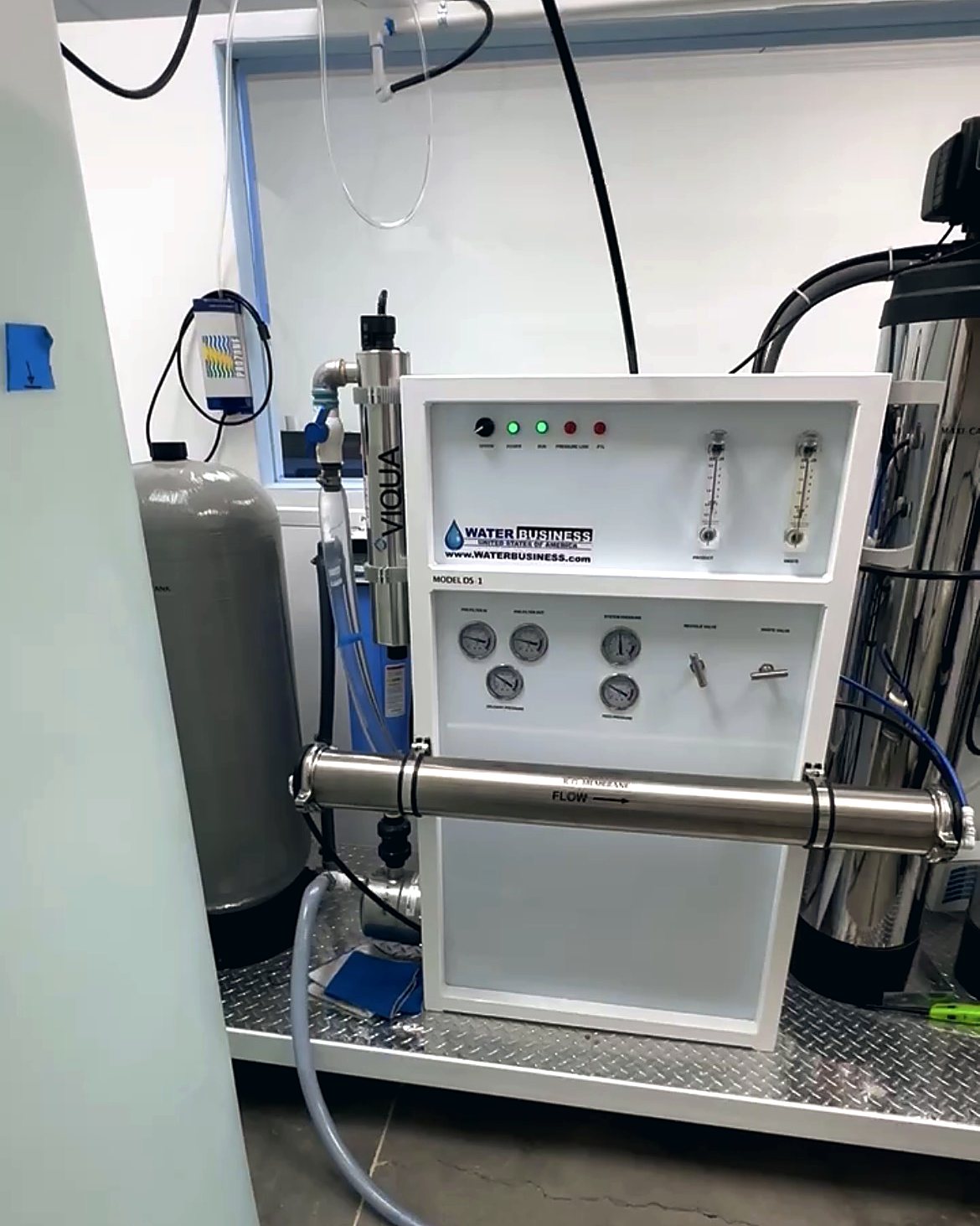
Reverse osmosis pushes water through a very fine membrane that holds back most dissolved solids, along with many other substances. It's the most thorough option for drinking water, and it's the one most often chosen by homeowners who want the lowest dissolved solids level at the tap. Because RO strips minerals along with everything else, many systems add a remineralization stage afterward to restore a balanced taste. The Alka75 drinking water system is built this way, pairing reverse osmosis with remineralization at the kitchen tap. One tradeoff worth understanding is that RO sends some water to the drain as part of how it works, and an efficient setup keeps that to a minimum.

Whole House Systems
A whole house system treats water where it enters your home, so every tap, shower and appliance receives treated water. This is the right tool for chlorine in showers, scale from hardness, or sediment, and it protects plumbing and appliances. It's usually combined with a dedicated drinking water system at the kitchen tap, since whole house treatment and point-of-use drinking water do different jobs. Our guide on water softeners versus water filtration systems explains how the two fit together, and you can browse the whole house water softener collection if hardness is your main issue.
Which One Is Best for Which Situation?
Matching the type to the goal is where the "best" question gets answered, and the pattern is fairly consistent across households.
If your main goal is better taste and you're renting or on a tight budget, a good certified pitcher or faucet-mount filter is a sensible start. If you want a lasting upgrade for cooking and drinking at the kitchen sink and you like a fuller mineral taste, an under-sink carbon block system is a strong middle option. If you want the lowest level of dissolved solids and a consistently clean, neutral taste, under-sink reverse osmosis with remineralization is usually the best fit. And if the problem is hardness, chlorine in the shower, or scale throughout the house, a whole house system is the right place to start, with a drinking water system added at the tap.
Many homes end up with a combination, such as a softener or whole house filter plus an under-sink RO system for drinking. A package like the Protector One & Alka75 is built around exactly that idea, treating the whole house and the drinking tap together.
Certifications: How to Tell Performance From Marketing
Two systems can make nearly identical claims on the box, which is why certifications matter. Independent testing against recognized standards is the clearest way to confirm that a system does what it says.
NSF/ANSI Standard 42 covers aesthetic effects like chlorine taste and odor. Standard 53 covers health-related contaminant reduction, such as lead and certain other substances. Standard 58 applies to reverse osmosis systems, and a separate protocol, NSF/ANSI P473, applies to the reduction of PFOA and PFOS. When you're comparing systems, check which specific claims each certification covers, since a system can be certified for some contaminants and not others. Ask for the certification documents for any system you're considering, and be cautious of any listing that uses vague phrases like "removes up to 99% of impurities" with no standard named.
Questions to Answer Before You Buy
A few practical questions narrow the field quickly and save you from buying the wrong thing.
What do you actually want to change about your water: taste, a specific contaminant, hardness or all three? How much water do you use for drinking and cooking each day? Do you own your home or rent, since that affects what you can install? What are the ongoing costs, including filter and membrane replacement schedules? And how much water will the system send to the drain, if it uses reverse osmosis?
Answering these honestly often points straight at one or two systems, and it gives you something concrete to ask about when you talk to a supplier.
Think About the Cost of Ownership
The sticker price is only part of the picture. Filters and membranes need replacing on a schedule, installation may require a plumber, and some systems use more water or electricity than others. A cheaper system with expensive, frequent replacements can cost more over a few years than a better-built one, so ask for the full replacement schedule and the per-year cost before you decide.
It's also worth comparing the total to what your household currently spends on bottled water. Many families find that a properly sized home system pays for itself over time while also cutting down on plastic.
Getting Local Advice for Your Home
Because the best system depends on your water, your home and your goals, the most reliable path is a conversation with someone who can look at all three. You can browse our full range of residential water filtration systems, or if you'd rather talk it through, book a consultation and we'll help you narrow it down based on your home's water and how you use it.