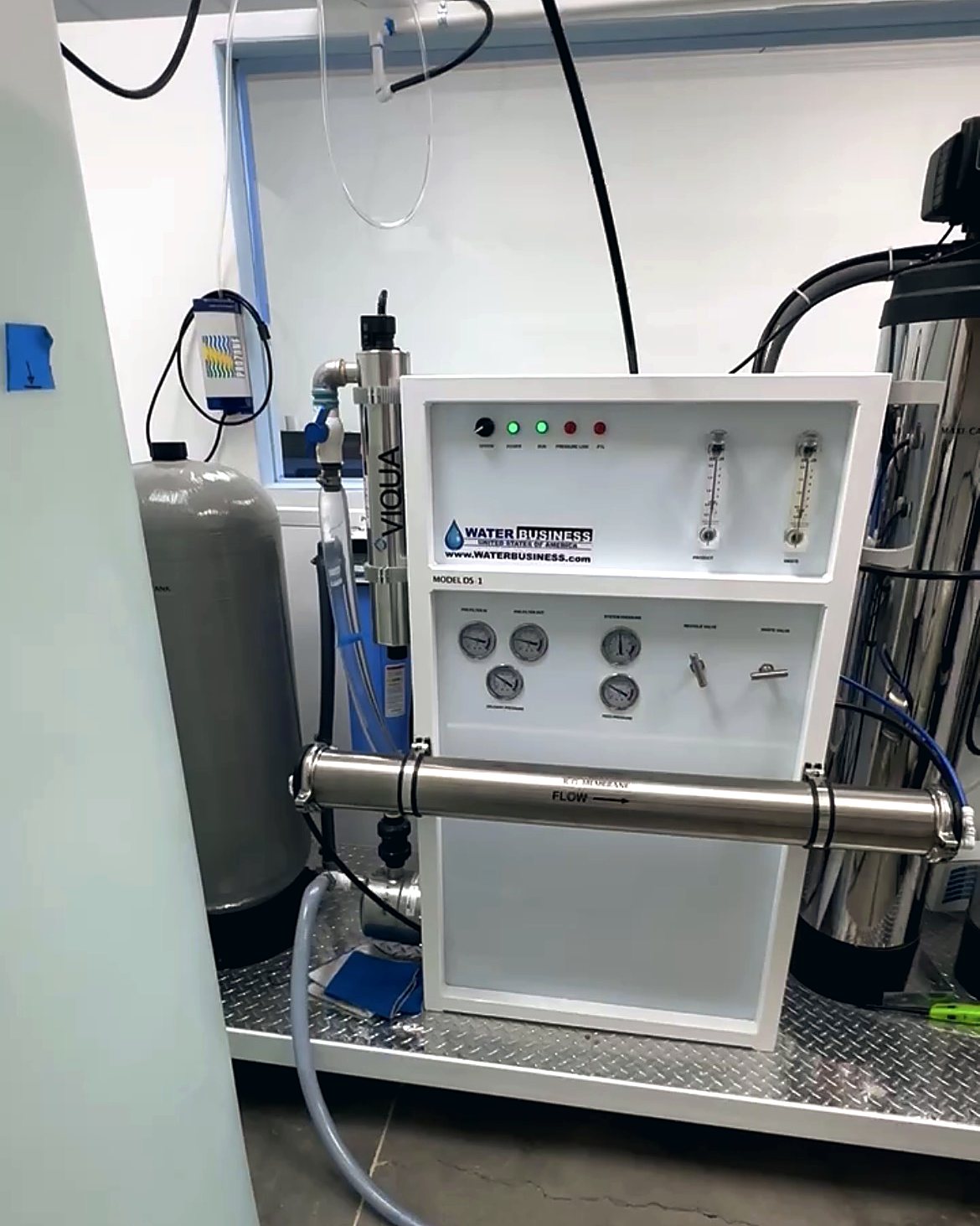
If you've been researching reverse osmosis, you've probably run into the same worry over and over: RO systems waste water. It shows up in forum threads, product reviews and conversations with neighbors, and it's often stated as a flat fact with no explanation. Is it true? How much water are we talking about? And where does it actually go?
The honest answer is that yes, reverse osmosis sends some water to the drain, but the story is more nuanced than "RO wastes water." Understanding how the process works, what that rejected water contains, and what affects the amount makes it much easier to decide whether RO fits your home and how to get the most out of a system if you choose one.
Why Reverse Osmosis Produces Reject Water at All
Reverse osmosis works by pushing water through a semi-permeable membrane with extremely tiny openings. Water molecules pass through, while most dissolved minerals, salts and other particles are held back. The water that makes it through the membrane is called permeate, and it's the clean water you drink.
The problem is that the material blocked by the membrane has to go somewhere. If nothing carried it away, it would pile up on the membrane surface and clog it within days. So a continuous stream of water flows across the membrane, sweeping the rejected material off and sending it out through a drain line. That stream is called reject water, brine or concentrate, and it's simply the part of your incoming water that carries away what the membrane filtered out. It isn't a malfunction. It's how the technology keeps itself working.
Where the Reject Water Goes
In a typical under-sink system, the reject water travels through a small drain line that connects to your sink's drain pipe, usually through a clamp-on fitting called a drain saddle. Every time the system makes water, a thin trickle runs to the drain, which is why you may hear a faint gurgle or trickling sound from under the sink while the tank refills.
Many systems pair this with an air gap faucet, a small extra fitting on the countertop that keeps drain water from ever flowing backward toward the RO system. In larger setups, including whole house reverse osmosis, the reject stream is plumbed to a dedicated drain line, and it's usually higher in volume simply because the system treats a lot more water. At no point does reject water mix with the clean water you drink. They travel in separate lines on opposite sides of the membrane.
How Much Water Does an RO System Reject?
This is where numbers matter, and where a lot of confusion comes from. The amount of reject water depends on the system's recovery rate, which is the percentage of incoming water that ends up as clean water. Older or basic under-sink units have often been cited as sending roughly three to four gallons to the drain for every gallon of clean water produced, while newer, more efficient designs can bring that closer to one or two gallons, and some commercial and whole house systems are designed for even better recovery.
It helps to put that in context of how much water most households run through an RO system. Most people only send drinking and cooking water through it, which is typically a gallon or two a day for a household. Even at a high reject ratio, that's a small share of overall household water use compared with showers, laundry and irrigation. Whole house systems are a different scale because they treat much more water, which is why recovery rate and proper sizing matter far more in that setting. If you're considering one, ask for the specific recovery rate of the exact system and don't rely on general figures.
What Affects How Much Water Gets Rejected
Several factors push the ratio up or down, and most of them are things you can influence.
Water pressure is the biggest one. RO membranes work best within a pressure range, and low incoming pressure produces more reject water for each gallon of clean water. The hardness and dissolved solids level of your incoming water also matters, since harder, mineral-heavy water puts more load on the membrane. This is one reason Santa Clarita homes often pair a softener or pre-filtration with RO. Our guide on water softeners versus water filtration systems explains how the two work together.
Membrane condition plays a role too. As a membrane ages or fouls, it rejects more water and produces less. And the storage tank matters: a properly pressurized reverse osmosis tank helps the system run in efficient cycles instead of running constantly.

Ways to Reduce RO Wastewater
If water use is a priority for you, there are practical options. A permeate pump is a small add-on that uses the reject water's own pressure to push clean water into the tank, which can sharply improve recovery on typical home pressure. High-efficiency membranes and systems designed for better recovery do the same job at the design level. Making sure your incoming water pressure is in the right range, and replacing filters and membranes on schedule, keeps the system from drifting toward wasteful operation.
You can also put reject water to use. Because it's the same source water with a higher concentration of dissolved minerals, it's well suited to jobs that don't involve drinking or cooking, such as mopping floors, washing the car or flushing. If you want to use it on plants, keep in mind that some plants are sensitive to dissolved salts, so test a small area first. Plumbing it into a bucket or a collection container takes only a little effort for the right household.
Is It Worth It?
For many households the trade-off makes sense. In exchange for the reject stream, you get drinking water with a very low level of dissolved solids, and in Santa Clarita, where tap water is known for being hard and mineral-heavy, that difference is easy to taste. Compare the reject volume to what a household spends on bottled water and plastic, and many people find the water used by an efficient RO system is modest.
It also helps to separate the issues. A system that sends reject water to the drain isn't doing anything unsafe or broken, and the amount isn't fixed. It's a design and setup question, which means you can choose a system and a configuration that fits how you want to use water. If you drink very little RO water, the total is small. If you're treating a whole house, that's the time to look closely at recovery rate and sizing before you buy.
Choosing an RO System That Fits Your Home
The right system depends on how much water you use, what's in your incoming water, and whether you want RO at one tap or throughout the house. Our guide on choosing the right water filtration system for your home walks through those questions step by step. For drinking and cooking at a single tap, the Alka75 drinking water system pairs reverse osmosis with remineralization for balanced, great-tasting water, and you can ask us about its recovery rate and setup for your home. To compare other options, browse our residential water filtration systems.
If you're weighing whole house reverse osmosis specifically, the best first step is a short conversation about your water use, since sizing and recovery rate matter much more at that scale. You can book a consultation and we'll help you work out what makes sense.
Final Thoughts
Reverse osmosis does send some water to the drain, because that stream is how the membrane stays clean and keeps working. How much depends on the system, your water pressure, your incoming water and how well the setup is maintained, and there are real ways to reduce it. Understanding that makes the decision much clearer than a flat "RO wastes water" ever could.
If you're in Santa Clarita and want a straight answer about how an RO system would work in your home, stop by the Clean River Water Store at 23365 Lyons Avenue or get in touch through our contact page, and we'll walk you through the numbers.